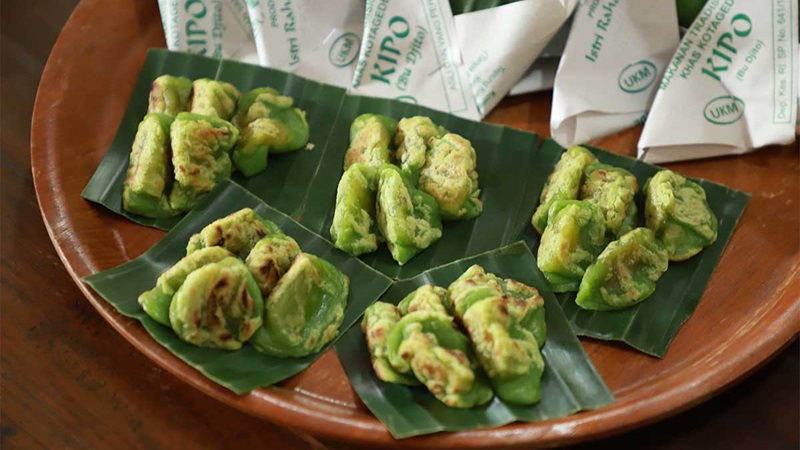
Tucked within the historic neighborhood of Kotagede, one small traditional snack quietly carries centuries of stories. This delicacy is known as kipo, a signature cake that has long been part of the local culinary heritage. Its existence can even be traced back to classical Javanese literature. In the famous Centini Book, the cake was once mentioned as kupo, while historian De Graaf also recorded it as a traditional dish often served to honored guests.
The name kipo itself has a charming story. When people first encountered this unusual little cake, they often asked in Javanese, “iki apa?”—which means “what is this?”. Over time, the repeated question gradually evolved into the name we know today: kipo.
Despite its small size, kipo holds a rich combination of flavors and textures. The dough is made from glutinous rice flour mixed with coconut milk, sugar, and a pinch of salt, then naturally colored green using pandan leaf extract. Each piece is carefully shaped into a small fan-like form, measuring around 4 x 2 centimeters. Inside, there is a sweet filling known as enten-enten, made from grated young coconut cooked with palm sugar, creating a fragrant caramel-like taste.
The process of making kipo is just as special as its story. The cakes are gently grilled on a flat surface lined with banana leaves, allowing the heat to slowly cook the dough while infusing it with a subtle smoky aroma. Once ready, the cakes are traditionally wrapped in banana leaves, with five pieces neatly packed in each small bundle.
Today, this humble snack continues to survive amid the modern culinary world. In Kotagede, families such as Mulyo Wiharto and his younger brother Gito Suharjo continue to preserve and develop the tradition of making kipo, ensuring that this small yet meaningful piece of heritage remains part of the living culture of the community.
More than just a sweet treat, kipo is a taste of Kotagede’s history—simple, authentic, and filled with stories passed down from generation to generation.